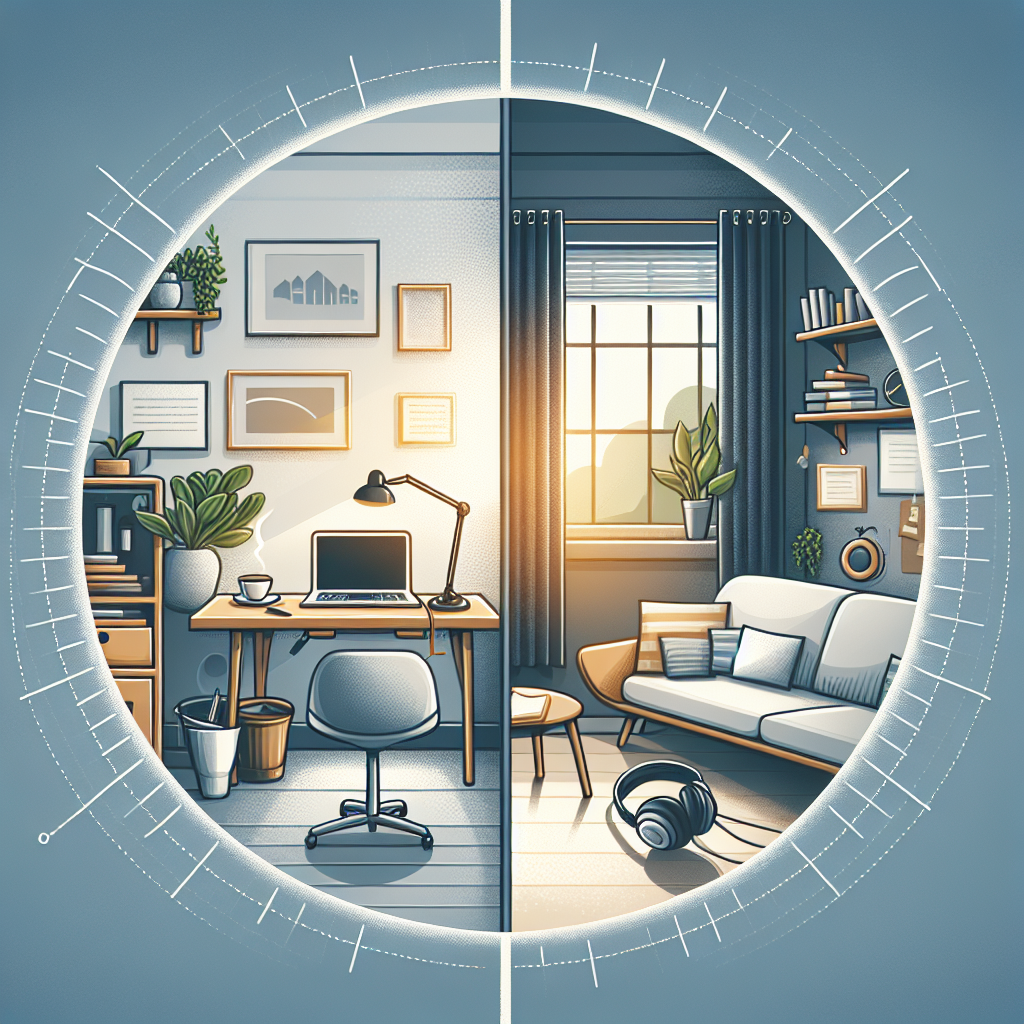
When did messages from coworkers start infiltrating our dinner time? Have you ever found yourself on a conference call while folding laundry? Welcome to the work-from-home chaos, where boundaries blur faster than your Wi-Fi can buffer a Netflix series. Balancing professional duties and personal life seems like a magic trick we can’t quite master. But it’s not impossible—with a strategic approach, setting boundaries when working from home can be as simple as hitting “do not disturb” on your phone.

I review remote work tools so you don’t have to waste time on ones that don’t deliver. Let me walk you through this.

Understanding the Role of Boundaries
Setting boundaries is more than just declaring work hours—it’s about establishing a mindset that differentiates work tasks from personal life to keep burnout at bay. Why are boundaries important? They help:
– Manage expectations from colleagues and family.
– Reduce stress by preventing overlap between work and personal duties.
– Enhance productivity by allocating focused time blocks for deep work.

The Downside of Boundary Blurring
Failing to draw a clear line can lead to constant distractions, irritability, and exhaustion. A survey by Buffer revealed that 22% of remote workers cite “unplugging after work” as their biggest struggle. Without boundaries, work can encroach into personal time, leaving us feeling like we’re always “on.”
Strategies to Set and Maintain Boundaries
Create a Dedicated Workspace
Reclaim a part of your home exclusively for work. This doesn’t need to be a full-fledged office; even a corner with a desk and a chair can signal your brain to switch into work mode. During my first few months working from home, my workspace was my dining table, and it was a disaster. The minute I set up a real home office, my productivity skyrocketed.
Establish and Communicate Working Hours
Set clear start and stop times to your workday, and communicate these to your team and household. Transparently list your availability in your email signature or calendar. During my testing, I found colleagues respected my “off-the-clock” hours more when I was explicit about them.
Use Technology to Reinforce Boundaries
Leverage tools like NordVPN to segment your online activity, or use software that schedules email delivery times. Tools can create a wall around your personal time when discipline falters. Remember, it’s perfectly acceptable to let calls go to voicemail after hours.
Schedule and Honor Breaks
Short breaks improve concentration. Integrate techniques like the Pomodoro Technique, which encourages 25-minute work sprints followed by brief breaks. For me, using a simple kitchen timer was unexpectedly effective—it became my ally that honored my boundaries.
Set Obligations Beyond Work
Anchor your schedule with obligations outside of work, like exercise or family dinners. These commitments create natural endpoints that motivate shutting down your computer. Joining an evening yoga class was transformative for me; it provided a steadfast reason to end my workday.
Be Firm but Flexible
Boundaries evolve. If your current setup isn’t working, adapt. For instance, implementing technology-free weekends relieved me in ways I hadn’t imagined. Customize boundaries based on what helps you stay balanced.
Who Should Be Setting Boundaries?
The Busy Multitasker
If you find yourself constantly juggling tasks—switching between work, child care, and household management—you need boundaries more than anyone. Avoid diluting focus by setting time blocks dedicated to each area.
The Remote Work Newbie
Those new to remote work might be tempted to overcompensate for lack of visibility by being constantly available. Don’t. Establish boundaries early to set the tone for work-life rhythm.
The Ambitious Overachiever
If you aim for high productivity, remember that more isn’t always better. Deadlines are important, but so is your downtime and mental health.
The Distraction-Prone
For those who struggle with distractions, boundaries are a necessity not an option. Mitigate disturbances by setting physical and digital guards.
Comparison Table: Essential Tools for Work-from-Home Boundaries
| Tool | Purpose | Best For | Rating |
|---|---|---|---|
| NordVPN | Secure your network and segment online activity | Security-conscious users | 9/10 – Reliable and feature-rich |
| Google Calendar | Scheduling and time management | Time management | 8/10 – Widely used and easy to integrate |
| Slack | Team communication | Collaborative teams | 8/10 – Great for team connectivity but can lead to notification overload |
| Trello | Task and project management | Project-oriented workers | 8/10 – Intuitive interface with flexibility for personal and team projects |

My Verdict
If you take away one thing from this guide: boundaries are key to a sustainable work-from-home life. Only through practice and intentional strategies will you find the equilibrium needed to maintain both productivity and personal well-being. Set clear lines, use technology wisely, and don’t hesitate to pivot if things don’t work initially.

FAQ
How can I enforce boundaries with my family when working from home?
Start with a family meeting to discuss your needs and set mutual expectations. Create visual cues, like a “Do Not Disturb” sign on your door, when in deep work periods. Educate your family on your schedule and the importance of respecting it.
What if the team expects 24/7 availability?
Communicate your limits clearly and remind them of your agreed contractual hours. Use technology to indicate your working and offline hours and ensure any communication during off-hours is addressed promptly during business hours.
How do digital detox practices help in setting boundaries?
Digital detox can help reinforce boundaries by creating intentional offline periods. By unplugging outside work hours, you’re effectively splitting your work and personal time, minimizing burnout risks.
Can setting boundaries improve my work productivity?
Absolutely. Boundaries create designated times for focused engagement and give your brain space to recharge. This can lead to more effective work periods and increased creative problem-solving capabilities.
How can I avoid checking work emails during personal time?
Establish a routine where checking emails is only part of your work hours. Disable notifications after working hours and leverage scheduling tools so your communications are dispatched during office time.
Are there any tools that can help with managing on-time and boundary-setting?
Certainly! Tools like NordVPN for security, Google Calendar for time management, and applications like Trello for planning can aid significantly. Each serves a unique purpose in maintaining professional boundaries. Consider integrating these into your workflow.
Test everything. Trust nothing. — Alex
Keep Reading on Remote Work Trail
- Best Standing Desks For Home Office 2026 Tested
- Best Laptops For Working From Home 2026
Test everything. Trust nothing. — Alex
P.S. Want my complete list of tested and approved tools? Grab my free ebook here.
— Alex Trail, Remote Work Trail
Explore More from Trail Media Network
Looking for more expert reviews and guides? Check out our sister sites:
- AI Tool Trail — AI tool reviews and comparisons
- Automation Trail — Automation and workflow guides
- Software Trail — Software reviews and tutorials
Leave a Reply